Tourtière is here. The pie that starts arguments at Christmas.
Tourtière. Say it “toor-tee-AIR.” Or just say “the meat pie.” Everybody will know.
Flaky crust, warm holiday spices, potato. People make tourtière with all sorts of meats, ours just happens to be pork. It’s the French-Canadian Christmas Eve tradition that crossed the border, moved into Maine mill towns, and never left, and this December, Only Pans is making it for your table.
Find it in our December Specials category, a limited December run, made fresh at the shop.
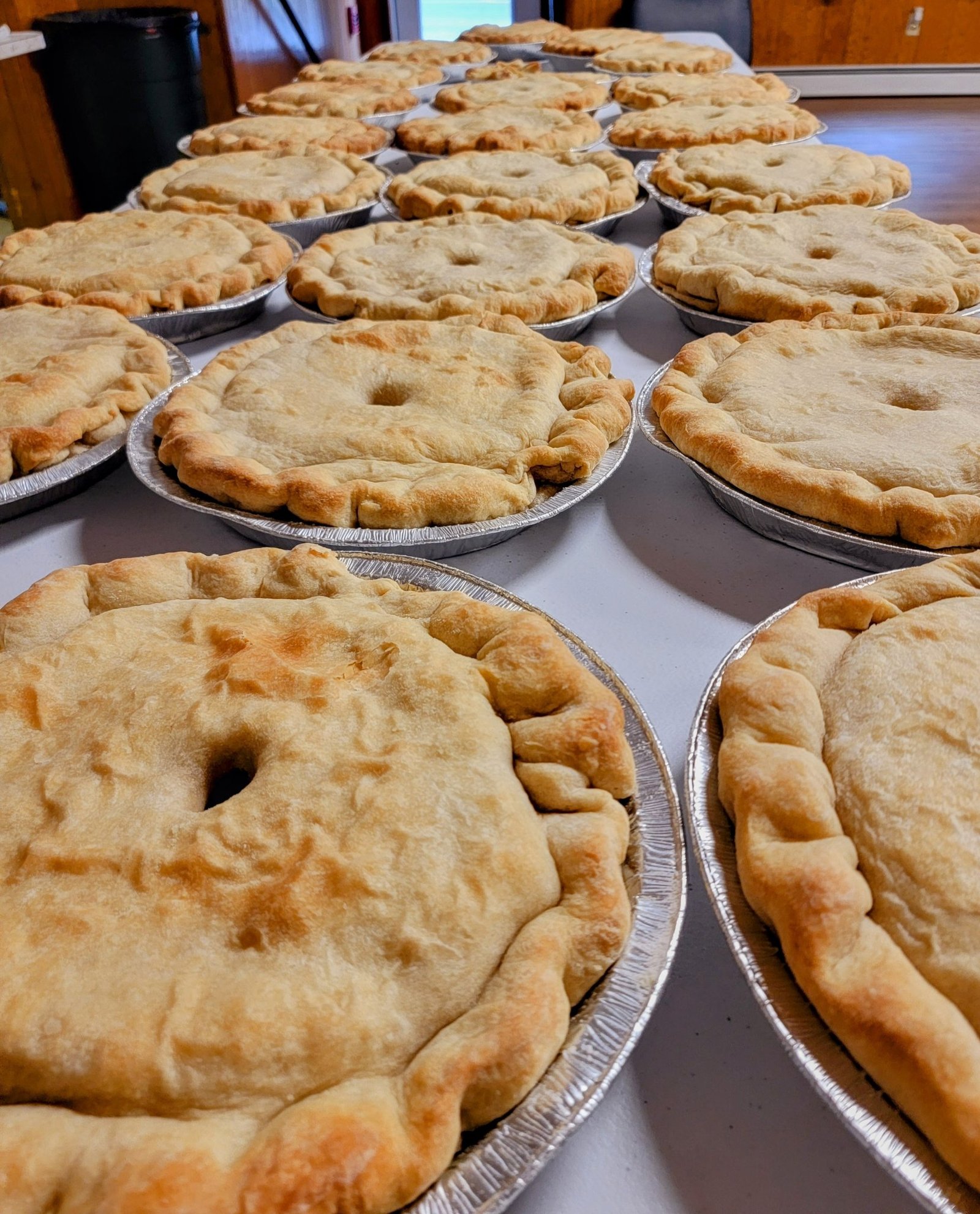
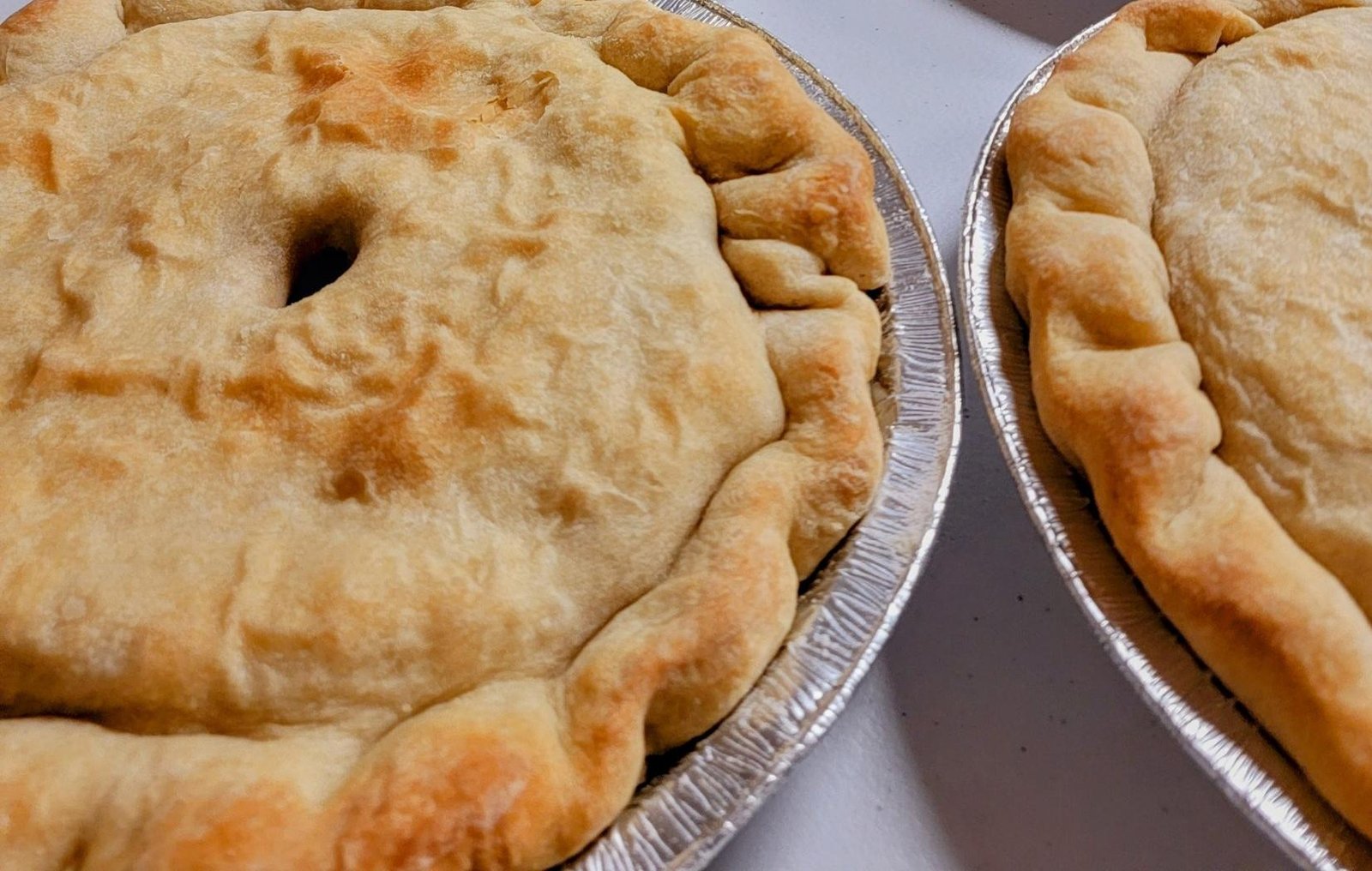
These are ours · $25 · Heat & ServeOur own pork tourtières, right off the table at Only Pans. One whole pie for your table, just heat it at home.
400+ yearsOn the table
Québec-bornFrench-Canadian
RéveillonThe Christmas Eve feast
Every familyHas “the” recipe
$25Heat & Serve · + tax
December Specials
Limited December run · While they last
December SpecialsHeat & ServeLimited December Run
Tourtière, Whole Pork Pie
$25whole pie · plus tax · pork · heat & serve
People make it with all sorts of meats, ours just happens to be pork. A proper double-crust pork pie, seasoned the old way, warm spices, savory filling, crust that flakes the way it’s supposed to. It’s heat & serve: we make it, you heat it at home until it’s hot through and crisp, and your kitchen gets all the credit. We won’t tell you it tastes exactly like your memère’s. Nobody’s does. That’s kind of the whole point of this page.
Whole pork tourtière, $25 plus tax, heat & serve
Made at Only Pans in Waterville for Christmas Eve réveillon, and just as good on Christmas Day
Order ahead online so yours is set aside. December pies go fast
Heating directions are right on this page, in the oven until hot and crisp
Order in the December Specials category at onlypansme.com and pay online. We’ll have your pie ready for pickup at the shop. It’s $25 plus tax, added at checkout.
From Our Kitchen · The Story Behind the Pie
Every family has a recipe. Every family swears theirs is the right one.
This is the story of tourtière: where it came from, why people eat meat pie at one in the morning, how it ended up in Maine, and why putting five relatives in a room with two tourtières is a contact sport.
From the kitchen at Only Pans · Waterville, Maine · December
Chapter One: It started with a pot
Here’s the first surprise: tourtière isn’t really named after the pie. It’s named after the dish it was cooked in. Back in early Québec, a deep cooking vessel called a tourte gave its name to what went inside it, and what went inside it, in a cold new colony where winter lasted half the year, was whatever good meat could be sealed under pastry and baked until the whole house smelled like a holiday.
French settlers brought the idea with them in the 1600s: meat, pastry, patience. The earliest versions weren’t fussy. They used what the land offered, pork, wild game, sometimes pigeon (there was once a passenger pigeon, the tourte, in the story too, which is either a neat coincidence or the best-named bird in history). The point was preservation and celebration at once: a pie that could feed a crowd, travel to a neighbor’s house, and sit at the center of the biggest meal of the year.
And here’s the thing about a dish that simple: meat, potato, spice, crust. It doesn’t stay one dish. It moves into a thousand kitchens, and every kitchen quietly edits it. A little more cinnamon here. No cinnamon, ever, over there. That’s not a flaw in tourtière. That is tourtière. Four hundred years later, the pie hasn’t been perfected. It’s been personalized, by every single family that ever made it.
“There is no original recipe. There are only original families.”
Christmas Eve in old Québec, snow coming down, church letting out, and a hot pie waiting at home. That’s réveillon.
Chapter Two: Why are we eating pie at one in the morning?
To understand tourtière, you have to understand réveillon. The word comes from réveiller: to wake up. And that’s literally what happened. Families fasted or ate lightly on Christmas Eve, went to Midnight Mass in the snow, horse-drawn sleighs in the early days, everybody bundled to the eyebrows, and came home after midnight absolutely starving, to the biggest, warmest feast of the year.
Waiting on the table: tourtière, front and center. Alongside it, depending on the house, you’d find ragoût de pattes (a rich pork stew), roast meats, pickles, beets, desserts, a spread built to reward you for sitting in a cold church and to keep the party going until two, three in the morning. Nobody was checking the time. The pie got cut, seconds happened, somebody’s uncle told the same story he told last year, and nobody stopped him, because his mouth was full of tourtière for part of it anyway.
That’s the tradition baked into every slice: this is not a Tuesday dinner pie. This is a we stayed up for this pie. A celebration pie. A “the year was long, sit down” pie. When Franco-American families carried the recipe south into New England, réveillon came with it, and in plenty of Maine homes, it never left.
Four centuries, one pie
1600s
French settlers in Québec bake meat pies in a deep dish called a tourte. The dish gives the pie its name: tourtière.
1700s–1800s
Tourtière becomes the centerpiece of réveillon, the feast after Midnight Mass on Christmas Eve. Every parish, then every family, develops its own version.
Late 1800s
French-Canadians move south for work in New England’s mills and factories, recipes travel in memory, rarely on paper.
1900s
Franco-American towns across Maine: Waterville, Lewiston, Biddeford, Augusta and more, keep réveillon and tourtière alive in church suppers and family kitchens.
This December
Only Pans makes pork tourtière in Waterville as a brand-new December Special, $25, heat & serve. The argument about the right recipe continues, exactly as it should.
Chapter Three: The Recipe Wars
Now we get to the good part: the part where everybody is wrong except you. Ask ten French-Canadian families how tourtière is made and you will start a discussion that can outlast the meal. Nobody is being difficult. They’re defending their grandmother. There’s a difference, and it matters.
The meat. People make it with all sorts of meats, and every camp thinks its meat is the whole point. Pork only, say the purists, that’s the classic. Pork with a little beef, say the pragmatists, that’s how our family has always done it. Veal in the mix? Some families swear by it. Game meat? Go far enough back and far enough north and absolutely. At Only Pans, we’ll settle our corner of it plainly: ours just happens to be pork.
The potato. This one gets heated. Mashed potato folded right into the meat, so the filling holds together in a clean slice? Or potato in distinct little cubes, so you can see it and taste it? People have chosen their hill. They will die on it. Politely, it’s Christmas, but they will die on it.
The spices. Cinnamon: warm and essential, or a crime against pie? Clove: just a whisper, or don’t you dare? Nutmeg, allspice, savory, a bay leaf while the filling simmers, every family’s spice blend is a fingerprint, and most of them were never written down. They were learned standing next to somebody at a stove, which is why “a pinch” remains the most argued-over unit of measurement in Québec history.
And then, the topping. Plain, the way it came out of the oven. A spoon of fruit ketchup, sweet and tangy. Regular ketchup (say it quietly in some houses). A ladle of gravy. This is where Christmas dinner turns into a debate club, and honestly, it’s half the fun. The pie is delicious. The argument is tradition.
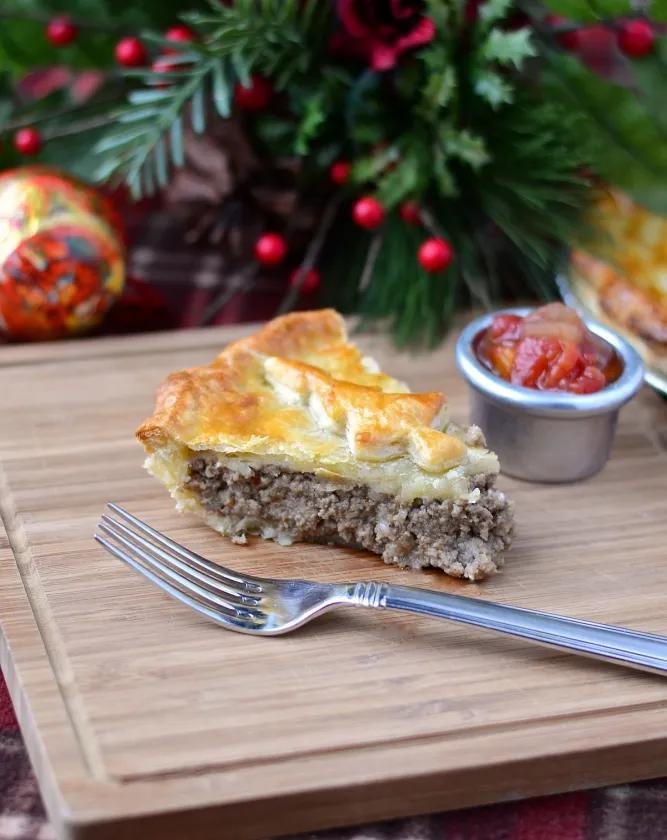
Exhibit A in the topping wars: a slice with fruit ketchup on the side. Your family’s position on this is already decided, you just don’t know it until somebody serves it wrong.
Take your side. Everybody else has.
There are no wrong answers, except, according to your relatives, all of the ones you’re about to pick. Tap your family’s rules and see where you land.
1 · The meat should be…
2 · The potato should be…
3 · Cinnamon in tourtière?
4 · On top of your slice goes…
Chapter Four: A pie with a passport
Travel around Québec with a fork and you’ll learn the map by eating it. The tourtière of Québec City leans classic: finely textured pork filling, warm spice, a pie meant to slice clean at a crowded table. Montréal’s version grew up in a city, with every neighborhood and every family putting its own stamp on the filling and the crust.
Then you get to Saguenay–Lac-Saint-Jean, and the plot thickens, literally. Their famous tourtière du Lac-Saint-Jean is a different beast: a deep, slow-baked pie, layered with cubed meats and potatoes in a thick crust, cooked for hours until it’s the kind of dish you plan a whole day around. Call a Montréal meat pie “tourtière” in front of someone from the Lac and you may start the friendliest regional dispute in Canada. Both sides will feed you while they argue. Nobody loses.
Head east and Acadian families have their own meat pies and their own names and customs for them. Head south. Well. That’s our chapter. That’s Maine.
The ClassicQuébec City
Finely textured pork, warm holiday spice, a clean slice. The version most people picture first.
The City PieMontréal
Every neighborhood, every family, a slightly different filling. Urban, proud, and endlessly varied.
The Deep OneLac-Saint-Jean
Deep-dish, cubed meat and potato, baked for hours. Magnificent, and fiercely defended as the “real” tourtière.
The Home TeamFranco-American Maine
The recipe that crossed the border with mill families and stayed, in Waterville kitchens, church suppers, and now at Only Pans.
Chapter Five: How tourtière got to Maine
In the late 1800s and early 1900s, thousands of French-Canadian families did what families do when work calls: they packed up and went. The mills and factories of New England needed hands, and Québec families came south: to Lewiston, Biddeford, Augusta, and right here to Waterville, where French was heard in the shops, the churches, and the kitchens for generations.
They brought very little that you could put in a suitcase. What they brought instead was better: language, faith, music, and recipes carried in memory. Tourtière didn’t need a cookbook. It needed a grandmother, a stove, and a Christmas. So réveillon survived the move. Midnight Mass, the long table, the pie at one in the morning, in Maine, in French, then in English, then in the beautiful mix of both that Franco-American families still speak at the holidays.
That’s why this pie belongs on a Waterville table. It’s not an import and it’s not a novelty. It’s a homecoming. When we bake tourtière at Only Pans, we’re not borrowing somebody else’s tradition, we’re keeping one of this town’s own.
A recipe that survives a border, a language, and a hundred winters isn’t just food. It’s family, carried the only way family can be, by hand.And yes, your family’s version is still the right one
So here’s our honest promise, and it’s the most tourtière thing we can say: ours will not taste exactly like your memère’s. Nothing will, and anybody who promises you otherwise is selling something. What we can promise is a pie made with respect for the original: flaky crust, savory pork filling, warm spice. Made at Only Pans in Waterville, heat & serve at home, for the same reason it’s been made for four hundred years: because it’s December, because people you love are coming to the table, and because somebody should stay up late making sure there’s pie.
This year, that somebody is us. You just handle the argument about the ketchup.
Heat & serve: how to heat it (and win the night)
Your $25 tourtière is heat & serve: the heating at home is the main event, not an afterthought. Warm pie, cold night, people you like.
1Heat it in the oven
Heat in the oven at about 350°F until hot all the way through and the crust is crisp. That’s how it’s meant to be served. Follow any directions on your pie’s packaging first if they differ.
2Rest it a few minutes
Let it stand a few minutes after heating so the slice holds together. Tourtière rewards ten minutes of patience.
3On the side
Pickles, beets, a sharp salad, or fruit ketchup cut the richness beautifully. That contrast is part of the classic réveillon table.
4Leftovers
If there are any, reheat slices in the oven to crisp the crust again, or join the loyal following that eats a slice cold the next morning.
Questions, answered straight
What exactly is tourtière?
A French-Canadian savory meat pie in a double crust, with potato and warm holiday spices. People make it with all sorts of meats, ours just happens to be pork. It’s the traditional centerpiece of réveillon, the Christmas Eve feast after Midnight Mass.
How much is it?
$25 for a whole pie, plus tax, added at checkout.
What does “heat & serve” mean?
We make the pork tourtière, you heat it at home. Heat it in the oven at about 350°F until it’s hot all the way through and the crust is crisp, rest it a few minutes, then slice. Full directions are in the Heat & Serve section above. Follow the directions on your pie’s packaging if they differ.
How do I order and pay?
Tap any “Order & Pay Online” button on this page. It takes you to onlypansme.com, where tourtière lives in December Specials as its own new item. Order and pay there ($25 plus tax), then pick up at the shop in Waterville.
When should I eat it?
Traditionally: after Midnight Mass on Christmas Eve, at a table that stays full until the small hours. Practically: Christmas Eve, Christmas Day, or any cold December night when a hot slice of pie sounds like the correct decision. It always is.
Will it taste like my grandmother’s?
It will taste like a proper tourtière made with care, and your grandmother’s will still be the one you measure everything against. That’s not a flaw in either pie. That’s the tradition working exactly as intended.
Don’t show up to Christmas without the pie.
Four hundred years of families can’t be wrong. Order your Only Pans pork tourtière now, $25 plus tax, heat & serve. Pick it up in Waterville, heat it at home, and bring the best argument of the season to your table.